
Does Pressure Washing Damage Brick Pavers? What Florida Homeowners Should Know
Pressure washing is one of the fastest ways to make a dirty driveway, patio, walkway, or pool deck look clean again. But if you have brick pavers, using more pressure does not always mean better cleaning.
Yes, pressure washing can damage brick pavers when excessive pressure, the wrong nozzle, poor technique, or repeated aggressive cleaning is used. The paver itself may survive the cleaning, but the joint sand between the pavers can be washed away, existing sealer can be affected, and already-worn surfaces may become more noticeable.
At the same time, pressure washing is not automatically harmful. When performed correctly as part of a professional paver cleaning or restoration process, controlled pressure washing can remove dirt, algae, mildew, stains, and other buildup before the pavers are re-sanded or sealed.
For Florida homeowners, the difference comes down to how the surface is cleaned, what condition the pavers are already in, and what happens after the washing is finished.

Why Do Brick Pavers Need Cleaning in Florida?
Florida is especially tough on outdoor hardscapes.
Heat, humidity, frequent rain, irrigation overspray, vehicle traffic, leaves, soil, pollen, and shaded areas can all contribute to buildup on brick pavers. During West Central Florida's rainy season, warm and humid conditions combine with frequent showers and thunderstorms, increasing the amount of moisture outdoor surfaces experience.
Over time, homeowners may notice:
Green or dark organic buildup
Dirt embedded in textured surfaces
Mildew or algae in shaded areas
Stains from leaves or landscaping
Tire marks and vehicle residue
Weeds growing between joints
Joint sand washing away
Dull or faded-looking pavers
Uneven appearance from aging sealer
Cleaning removes much of that surface contamination. The problem starts when homeowners assume the strongest pressure setting is always the best solution.
It isn't.
Can Pressure Washing Actually Damage Brick Pavers?
It can.
Brick and concrete pavers are designed to handle outdoor exposure, but a pressure washer concentrates water into a powerful stream. If that stream is held too close to the surface or used repeatedly on the same area, it may create problems.
The risk depends on the condition and material of the pavers, the existing coating, pressure level, spray pattern, equipment, and operator technique.
1. Pressure Washing Can Remove Joint Sand
One of the most common problems is not damage to the face of the paver itself.
It is loss of joint sand.
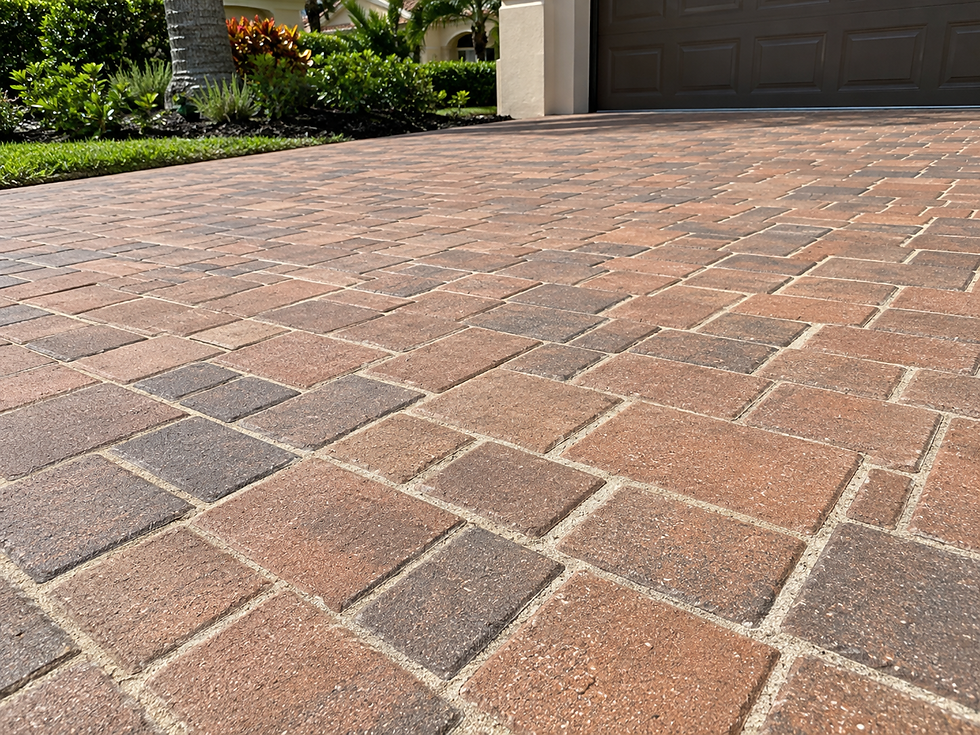
The sand between pavers plays an important role in the installation. When aggressive pressure washing blasts material out of those joints, gaps may become deeper and more exposed.
Once enough material is lost, homeowners may begin noticing:
More weeds between pavers
Ant activity
Water moving through open joints
Continued erosion
Less support around individual pavers
Pavers becoming more vulnerable to movement
Premier Coatings' restoration process specifically includes evaluating and replacing joint sand after cleaning when necessary. That is one reason professional paver cleaning involves more than simply washing the top of the surface.

2. Too Much Pressure Can Affect the Paver Surface
Some pavers are tougher than others.
Older pavers, weathered concrete pavers, surfaces that have already lost some of their finish, or pavers with existing deterioration may react differently to aggressive cleaning.
Holding a concentrated nozzle too close may leave an uneven appearance or make existing wear more visible.
This is why professional cleaning should be adjusted to the surface rather than treating every driveway or pool deck exactly the same way.
The goal is to remove contamination without unnecessarily attacking the material underneath it.
3. Pressure Washing Can Affect Existing Paver Sealer
If your pavers have already been sealed, the existing coating needs to be considered before aggressive washing.
A sealed surface is different from an untreated surface.
Depending on the type, age, condition, and adhesion of the existing sealer, aggressive cleaning may contribute to:
Uneven sheen
Dull areas
Exposed worn sections
Patchy appearance
Greater visibility of an already-failing coating
If the sealer is already peeling, whitening, cloudy, or inconsistent, pressure washing alone may not solve the problem.
The surface may require a more complete brick paver restoration process that addresses the existing coating before resealing. Premier Coatings notes that older or failing coatings can affect the appearance and performance of newly applied sealer.
Does That Mean You Should Never Pressure Wash Pavers?
No.
This is where homeowners sometimes get conflicting advice.
Pressure washing can be an effective part of professional paver cleaning. Premier Coatings uses controlled pressure washing during its restoration and sealing preparation process to remove dirt, stains, algae, and organic buildup.
The important distinction is between:
controlled professional cleaning
and
aggressive high-pressure washing with no consideration for the pavers, joints, or existing sealer.
For routine maintenance of previously sealed pavers, Premier Coatings specifically cautions against high-pressure power washing because unnecessary aggressive washing can contribute to joint-sand erosion and other maintenance issues.
In other words, the question is not simply:
“Can I pressure wash brick pavers?”
A better question is:
“What cleaning method is appropriate for the condition of my pavers right now?”
Why Technique Matters More Than Maximum PSI
Homeowners often focus on the pressure washer's PSI rating.
But proper paver cleaning involves more than selecting a number.
A technician should also consider:
Distance between the nozzle and surface
Spray angle
Nozzle pattern
Surface-cleaning equipment
Condition of the paver
Existing sealer
Joint-sand condition
Type of staining
Amount of organic growth
Drainage around the property
Whether the surface will be re-sanded or sealed afterward
A driveway covered with heavy organic growth may require a different approach than a lightly dirty sealed pool deck.
Similarly, pavers that have not been maintained for years may need restoration rather than another quick pressure wash.
What Happens If Pressure Washing Removes the Sand Between Your Pavers?
Do not simply ignore the empty joints.
If significant joint sand has been removed, the appropriate next step may include cleaning the remaining debris from the joints and replacing the lost sand as part of a professional restoration or sealing process.
At Premier Coatings, joint-sand replacement is part of the company's multi-step paver preparation process when applicable. Fresh silica sand is distributed into the joints before the sealing stages.
Proper joint preparation helps restore the installation after deep cleaning and prepares it for the next stage of treatment.
Simply blasting the driveway clean and walking away can leave part of the job unfinished.
Should You Seal Pavers After Pressure Washing?
Pressure washing does not automatically mean pavers must be sealed immediately.
However, if your pavers are due for sealing or restoration, cleaning is generally an important preparation step.
Sealer should not simply be applied over:
Dirt
Algae
Mildew
Heavy stains
Loose debris
Unresolved efflorescence
Failed coating
Improperly prepared joints
The surface first needs to be evaluated, properly cleaned, prepared, and allowed to reach the conditions required for the sealing product being used.
This is particularly important in Florida because humidity and frequent rain can affect drying and application conditions.
Premier Coatings uses a structured preparation and sealing process that includes cleaning, treatment of organic growth, rinsing, joint-sand preparation, and sealing based on the condition of the project.
Homeowners considering sealing can learn more about Premier Coatings' brick paver sealing services and professional preparation process.
What About Green Algae and Mildew on Florida Pavers?
This is one of the most common reasons homeowners reach for a pressure washer.
Florida's warm, moisture-heavy environment can encourage organic buildup, particularly where surfaces remain damp or shaded.
You may notice the problem around:
Pool decks
Covered patios
North-facing areas
Walkways beneath trees
Areas receiving irrigation overspray
Driveway edges
Pavers with drainage problems
Pressure washing can remove much of what you see on the surface, but blasting the area with more pressure does not necessarily address why the growth keeps returning.
Professional cleaning may include appropriate treatments designed to address organic contamination as part of the overall cleaning process.
Premier Coatings, for example, incorporates an algaecide treatment into its paver cleaning and restoration process.
If algae repeatedly returns after cleaning, it may also be worth evaluating shade, irrigation, drainage, existing sealer, and maintenance conditions rather than relying exclusively on increasingly aggressive pressure washing.
Can Pressure Washing Make Weeds Between Pavers Worse?
Indirectly, yes.
Pressure washing does not create weed seeds, but excessive cleaning can remove the joint material that helps fill the spaces between pavers.
Once joints become depleted, they can collect:
Soil
Leaves
Organic debris
Moisture
Airborne seeds
Those conditions can make joints more favorable for weed growth over time.
That is why a proper restoration process looks at the entire paver system, not only whether the surface looks cleaner.
Don't Forget About Pressure-Washing Runoff
There is another issue Florida homeowners may overlook: where all that dirty wash water goes.
When water moves across paved surfaces, it can carry dirt, sediment, chemicals, oil, lawn material, and other contaminants toward storm drains or nearby waterways.
The U.S. Environmental Protection Agency explains that stormwater flowing over impervious surfaces can collect pollutants and carry them into streams, lakes, groundwater, and coastal waters.
That does not mean homeowners cannot clean their pavers.
It means responsible exterior cleaning should consider drainage and runoff instead of simply pushing debris, cleaning material, sediment, or contaminated water into the street.

Pressure Washing vs. Professional Paver Cleaning
A basic pressure wash and professional paver restoration are not necessarily the same service.
A homeowner using a pressure washer may be focused on one thing:
getting the surface clean.
A professional paver restoration company should be evaluating more than appearance.
That may include:
Surface contamination
Existing sealer condition
Joint-sand levels
Organic growth
Staining
Efflorescence
Paver movement
Drainage concerns
Areas requiring repair
Proper preparation before resealing
If the pavers are simply dirty but otherwise in good condition, professional cleaning may be enough.
If they are faded, uneven, heavily stained, losing sand, covered by failing sealer, or beginning to shift, brick paver restoration may make more sense.
Signs Your Pavers May Need More Than Pressure Washing
Cleaning improves appearance, but it cannot repair every paver problem.
Consider having the surface professionally evaluated if you notice:
Joint Sand Is Disappearing
Deep or empty joints usually need more attention than another round of pressure washing.
Pavers Are Loose or Uneven
Cleaning will not correct settlement or movement underneath the installation.
The Existing Sealer Is White or Cloudy
This may indicate a coating or moisture-related issue requiring evaluation before another product is applied.
Color Looks Dull Even After Cleaning
The surface may be clean but no longer have the appearance it had after previous sealing.
Weeds Return Quickly
Repeated vegetation in depleted joints may signal that joint preparation needs attention.
Algae Keeps Returning
Recurring organic growth can point to moisture, shade, irrigation, maintenance, or coating conditions that
cleaning alone may not resolve.
The Surface Has Old or Failing Sealer
Applying more sealer without addressing the previous coating can create further appearance problems.
How Often Should Florida Pavers Be Pressure Washed?
There is no single schedule that applies to every Florida property.
A shaded pool deck may collect organic growth faster than a sunny driveway. A high-traffic driveway may need cleaning more frequently than a lightly used backyard patio.
Cleaning frequency can depend on:
Tree cover
Sun exposure
Irrigation
Drainage
Vehicle traffic
Pool water exposure
Nearby landscaping
Existing sealer
Previous maintenance
Local weather
The better strategy is to clean pavers when their condition requires it, using the least aggressive method appropriate for the surface.
Repeated heavy pressure washing just because a fixed number of months has passed can be unnecessary.
DIY Pressure Washing or Professional Paver Cleaning?
For very light surface dirt, routine homeowner maintenance may be sufficient.
But there are situations where hiring a professional can help avoid creating a bigger restoration project later.
Professional evaluation becomes especially useful when you have:
Older brick pavers
Previously sealed pavers
Significant joint-sand loss
Heavy algae or mildew
Oil or rust staining
Uneven pavers
White or cloudy sealer
Failed coatings
Large driveways or pool decks
Pavers that need resealing
The goal should not be to use the strongest machine available.
The goal is to clean the surface correctly while preserving the pavers and preparing them for whatever maintenance comes next.
The Bottom Line: Does Pressure Washing Damage Brick Pavers?
Pressure washing can damage brick pavers or contribute to maintenance problems when too much pressure or poor technique is used.
The most common concern is joint-sand erosion, but excessive pressure may also affect weathered surfaces or existing sealer.
However, pressure washing itself is not the enemy.
When controlled properly, it can be an important part of professional brick paver cleaning, restoration, and sealing preparation.
For Florida homeowners, the safest approach is to look beyond how clean the surface appears immediately after washing.
Ask:
Did the cleaning remove joint sand?
Is the old sealer still in good condition?
Are algae and mildew likely to return?
Does the surface need re-sanding?
Are there stains or coating problems that pressure washing cannot fix?
Is it time for restoration or sealing?
Those answers will tell you much more about your pavers than simply turning up the pressure.
Professional Brick Paver Cleaning, Restoration & Sealing in Florida
Premier Coatings provides professional brick paver cleaning, restoration, maintenance, and sealing for Florida homeowners.
Owner Ron Smith has worked in the paver cleaning and sealing industry since 2004, and Premier Coatings was founded in 2013. The company reports millions of square feet of completed paver restoration work throughout Florida.
Whether your driveway needs a professional cleaning, your pool deck is losing joint sand, or your older pavers need a more complete restoration and sealing process, the right first step is evaluating the current condition of the surface.
Call Premier Coatings at 727-237-5953 or request a free estimate to have your brick pavers professionally evaluated.
Frequently Asked Questions
Does pressure washing ruin brick pavers?
Not necessarily. Controlled pressure washing can safely remove dirt and organic buildup from many brick paver surfaces. Problems are more likely when excessive pressure, a concentrated spray, incorrect technique, or repeated aggressive washing removes joint sand or affects an already-worn surface.
Will pressure washing remove the sand between pavers?
Yes. Pressure washing can remove joint sand, particularly when the spray is directed into the joints or excessive pressure is used. If substantial sand is lost, the joints may need to be properly cleaned and re-sanded.
Should you re-sand pavers after pressure washing?
If pressure washing removes significant joint sand, re-sanding may be appropriate. Professional paver restoration and sealing services commonly evaluate joint depth after cleaning and replace sand where necessary.
Should brick pavers be sealed after pressure washing?
Not automatically. Pavers should first be properly cleaned, evaluated, prepared, and sufficiently dry. If the surface is already due for sealing, professional cleaning and joint preparation may be followed by an appropriate paver sealing system.
Can pressure washing remove algae from pavers?
Pressure washing can remove visible algae and organic buildup. However, excessive pressure is not necessarily more effective. Professional cleaning may combine controlled washing with appropriate treatments to address organic contamination.
Can I pressure wash sealed pavers?
Sealed pavers can be cleaned, but aggressive high-pressure washing may affect the coating or remove joint sand. The condition and type of existing sealer should be considered before cleaning.
Why do my Florida pavers turn green after rain?
Moisture, shade, humidity, organic debris, and frequent rainfall can create favorable conditions for algae and other organic growth. These conditions are particularly common during Florida's warm, humid rainy season.
Is professional paver cleaning different from pressure washing?
Yes. Professional cleaning may include controlled washing, treatment of algae or other contamination, assessment of existing sealer, joint-sand evaluation, rinsing, surface preparation, and recommendations for restoration or sealing based on the condition of the pavers.


Comments