
Algae on Pavers in Florida: Why Brick Pavers Turn Green After Rainy Season
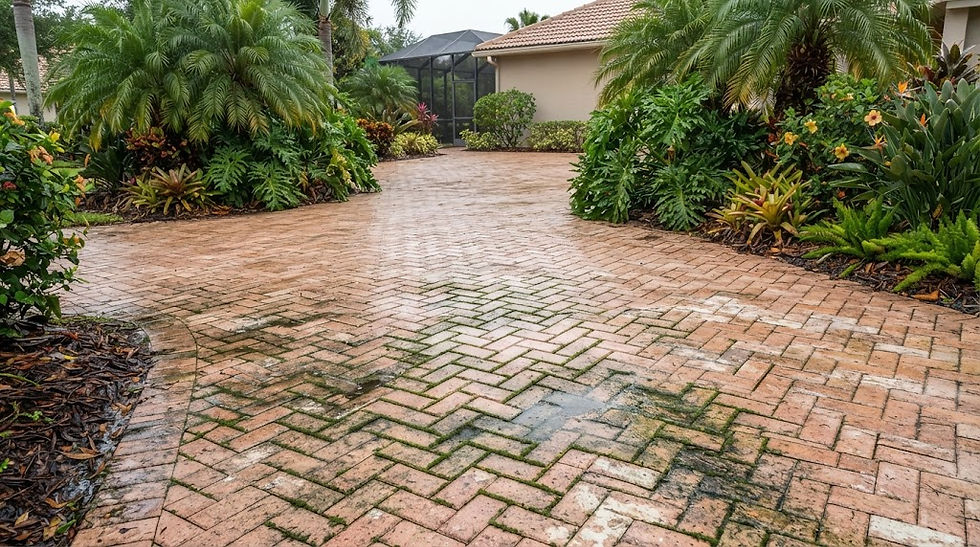
fter months of afternoon thunderstorms, high humidity, and wet outdoor surfaces, many Florida homeowners begin noticing something different about their brick pavers. Algae on pavers in Florida becomes especially common during and after the rainy season because repeated moisture, warm temperatures, and shaded areas can keep outdoor surfaces damp for longer periods.
Areas that looked clean earlier in the year may suddenly develop green patches, dark discoloration, or organic buildup between the joints. These changes are especially noticeable on patios, walkways, pool decks, and driveways that stay shaded or take longer to dry.
In many cases, that green appearance is associated with algae or other organic surface growth encouraged by moisture. While the discoloration may start as a cosmetic concern, recurring green buildup can also be a sign that certain areas of your pavers are staying wet longer than they should.
For Florida homeowners, understanding why algae grows on brick pavers and what conditions are causing it is the first step toward choosing the right cleaning, maintenance, restoration, or sealing solution.
Florida’s rainy season creates ideal conditions for outdoor surfaces to stay damp for longer periods. According to the National Weather Service, the rainy season in much of West Central Florida generally lasts from late May into early October.
The longer moisture, shade, dirt, and organic material remain on your brick pavers, the easier it becomes for green buildup to develop.
Why are brick pavers turning green in Florida?
Brick pavers commonly develop green growth when moisture, shade, dirt, and organic material remain on the surface for extended periods. Florida’s rainy and humid weather can make pavers stay damp longer, especially around shaded patios, pool decks, landscaping, joints, and areas with poor drainage.
Cleaning away the buildup and correcting recurring moisture or drainage problems can help. Professional brick paver cleaning, restoration, re-sanding, and sealing may also help keep the surface easier to maintain.

What Is the Green Growth on My Brick Pavers?
The green material you see on outdoor pavers is often associated with algae or similar biological growth, particularly when the surface remains wet and shaded.
You may see it as:
thin green discoloration
darker green patches
growth concentrated between joints
green film around shaded edges
dark staining beneath planters
buildup near landscaping
green or dark areas around drainage paths
Moisture is an important part of the equation.
The U.S. Environmental Protection Agency notes more generally that moisture plays a major role in biological growth such as mold and recommends addressing the underlying moisture source rather than simply cleaning the visible buildup.
For outdoor brick pavers, that means it is worth looking beyond the green color itself.
If the same area repeatedly turns green, ask:
Why does this part of the patio stay wet longer than the rest?
That can reveal the real maintenance problem.
Why Does This Happen So Often After Florida’s Rainy Season?
Florida gives outdoor pavers several conditions that encourage organic buildup at the same time.
1. Frequent Rain Keeps the Surface Wet
A single afternoon storm is usually not the issue.
The bigger problem is the repeated cycle of:
rain → partial drying → humidity → another storm → more moisture.
Pavers in shaded locations may never fully dry between storms.
Over several weeks or months, green buildup can become increasingly noticeable.
2. Florida Humidity Slows Drying
Even when it stops raining, humid air can slow how quickly outdoor surfaces dry.
Areas under trees, covered lanais, screen enclosures, and dense landscaping can remain damp longer than pavers exposed to direct sunlight and better airflow.
3. Shade Creates Persistent Damp Areas
Walk around your property and compare the sunny side with the shaded side.
Green growth often appears first:
beneath trees
near shrubs
beside fences
along shaded walls
beneath outdoor furniture
around covered patios
along pool enclosure edges
Less sunlight typically means slower evaporation.
4. Leaves and Organic Debris Collect on the Surface
Florida landscaping can drop:
leaves
grass clippings
pollen
flowers
soil
mulch
small plant debris
When this material remains wet on the pavers, it contributes to dirty surface conditions and can support organic buildup.
5. Drainage Problems Keep Certain Areas Wet
If one part of your patio or driveway stays green while the rest stays relatively clean, check how water moves through the area.
Water may be:
flowing from a downspout
collecting in a low spot
draining toward the patio
remaining around paver edges
pooling because of settlement
moving through areas with damaged joints
Cleaning helps the appearance, but recurring water problems should also be addressed.

Are Green Pavers a Sign That the Pavers Are Damaged?
Not necessarily.
Green surface growth does not automatically mean that your brick pavers need replacement.
Often, the pavers themselves may still be in good structural condition and simply need proper cleaning and maintenance.
However, the conditions surrounding the growth can reveal other problems.
Look for:
missing joint sand
shifting pavers
low spots
standing water
cracked pavers
weeds between joints
uneven edges
worn or failing sealer
For example, a patio that repeatedly collects water may develop both organic buildup and joint-sand erosion.
That is why a professional evaluation should look at the entire paver system, not simply the visible green stains.
Can Green Algae Make Pavers Slippery?
Wet organic buildup can make hard outdoor surfaces feel slicker, particularly around patios, walkways, pool decks, and other areas that remain damp.
This is another reason not to treat green discoloration as purely cosmetic.
Areas used for walking should be kept clean and maintained, especially where water regularly collects.
Pool decks deserve particular attention because they naturally experience additional moisture from rain, splashing, landscaping, and nearby irrigation.
Can I Pressure Wash Green Algae Off Brick Pavers?
Pressure washing can remove surface buildup, but more pressure is not always better.
Brick paver systems include joint material between each individual paver.
Using excessive pressure or concentrating the spray directly into the joints can remove joint sand along with the dirt.
That can turn one maintenance issue into another.
You may finish with cleaner-looking pavers but create:
low joints
missing sand
exposed gaps
loose pavers
easier weed growth
faster future joint erosion
This connects directly with another common rainy-season problem: sand washing out between pavers after heavy rain.
A professional cleaning process should consider both the surface and the condition of the joints.

Why Does the Green Growth Keep Coming Back?
If green buildup disappears after cleaning but quickly returns, the surface conditions may not have changed.
Common reasons include:
Persistent Shade
Some sections receive very little direct sunlight throughout the day.
Poor Drainage
Water repeatedly collects in the same location.
Irrigation Overspray
Sprinklers may be keeping part of the driveway, walkway, or patio wet even during periods without rain.
Tree and Landscaping Debris
Organic material continues accumulating on the pavers.
Worn Paver Protection
Older pavers may be more difficult to maintain if their previous protective treatment has worn away.
Cleaning removes what is visible today.
Long-term maintenance means also considering why the surface repeatedly stays damp or dirty.
How Are Green Brick Pavers Professionally Restored?
The exact process depends on the condition of the surface, but professional brick paver restoration may involve several steps.
Step 1: Inspect the Pavers
The contractor should first evaluate:
surface condition
drainage
joint sand
staining
previous sealer
loose or uneven areas
This helps determine whether the problem is primarily cleaning-related or part of a larger restoration need.
Step 2: Professional Paver Cleaning
The surface is cleaned to remove accumulated dirt and organic buildup.
Special attention may be needed around:
joints
shaded edges
pool areas
landscaping
high-traffic sections
Step 3: Re-Sanding When Needed
If existing joint sand is low or disturbed during the cleaning and restoration process, fresh joint material may need to be installed.
Proper joint maintenance helps keep the paver system stable.
Step 4: Allow Proper Drying
This step is especially important in Florida.
Applying a coating or sealer when excessive moisture is still present can contribute to poor results.
Weather conditions and the moisture level of the pavers should be considered before sealing.
Step 5: Apply Paver Sealer When Appropriate
Once properly prepared, brick paver sealing can help protect the restored surface and make future maintenance easier.
Depending on the selected product and desired finish, sealing may also help:
enhance paver appearance
reduce staining
stabilize joint material
make routine cleaning easier
protect against normal weather exposure
For homeowners considering restoration, learn more about Premier Coatings' professional brick paver sealing services.

Does Paver Sealing Prevent Algae From Ever Growing Again?
No paver treatment can realistically guarantee that algae or organic buildup will never return.
Outdoor pavers remain exposed to:
rainfall
humidity
landscaping
dirt
shade
irrigation
leaves and debris
However, properly restored and sealed pavers can generally be easier to maintain than a neglected surface.
The better strategy is:
proper drainage + routine cleaning + joint maintenance + professional sealing when appropriate.
Avoid promising permanent algae prevention.
Florida weather will continue to expose outdoor hardscapes to moisture and organic material.
How Can Florida Homeowners Reduce Green Buildup on Pavers?
A few simple habits can make a significant difference.
Keep Leaves and Debris Off the Surface
Sweep patios, pool decks, and walkways regularly.
Watch Your Sprinklers
Make sure irrigation is watering the landscaping rather than soaking the same section of your pavers every day.
Improve Drainage
Water should move away instead of repeatedly pooling on the surface.
Keep Paver Joints Maintained
Low or missing joint sand can allow debris and weeds to collect more easily.
Clean the Surface Before Heavy Buildup Develops
Maintenance is usually easier before the surface becomes heavily stained.
Inspect Pavers After the Rainy Season
Fall is an excellent time to check outdoor hardscapes for:
algae-like buildup
sand loss
weeds
settling
drainage issues
old sealer
staining
This makes the rainy-to-dry-season transition a practical time to schedule paver maintenance.

When Should You Call a Florida Paver Professional?
Consider having your pavers inspected when you notice:
widespread green or dark buildup
repeated growth after cleaning
slippery-looking shaded surfaces
joint sand loss
weeds between pavers
fading or dull pavers
standing water
uneven pavers
old or deteriorating sealer
Sometimes the solution is straightforward cleaning.
Other properties benefit from a more complete process involving cleaning, re-sanding, brick paver restoration, and sealing.
A professional can help determine which services actually make sense for the condition of your surface.
Restore Your Brick Pavers After Florida’s Rainy Season
Months of rain, humidity, landscaping debris, and afternoon storms can leave even a beautiful Florida paver surface looking green and neglected.
The key is not simply covering up the discoloration.
The surface should be cleaned properly, joint conditions should be evaluated, recurring moisture problems should be considered, and the pavers should be protected when appropriate.
Premier Coatings provides professional brick paver cleaning, restoration, re-sanding, and sealing services for Florida homeowners who want to restore the appearance of their driveways, patios, pool decks, and walkways.
If your brick pavers are turning green after rainy season, now is a good time to have them evaluated before the buildup becomes more difficult to maintain.
Frequently Asked Questions About Green and Algae-Covered Pavers in Florida
Why are my brick pavers turning green in Florida?
Green discoloration often develops when moisture, shade, dirt, and organic material remain on brick pavers for extended periods. Florida's rainy and humid conditions can make shaded outdoor surfaces stay damp longer.
Is the green stuff on my pavers algae or mold?
Green outdoor buildup is commonly associated with algae and other organic growth, but appearance alone may not always identify the exact organism. Regardless, recurring moisture and surface contamination are important factors to address.
Why do my pavers turn green after heavy rain?
Frequent rainfall keeps pavers wet and can leave organic debris on the surface. Shaded areas with poor airflow or drainage often take longer to dry, creating favorable conditions for green buildup.
Can pressure washing remove algae from brick pavers?
Pressure washing can remove surface buildup, but aggressive pressure can also disturb joint sand. Proper cleaning methods should protect both the paver surface and the joints.
Will sealing pavers prevent algae?
Sealing cannot guarantee that outdoor pavers will never develop algae or organic buildup. However, properly restored and sealed pavers may be easier to clean and maintain.
When is a good time to clean and seal pavers in Florida?
Many homeowners inspect and maintain their pavers as Florida transitions out of the rainy season. The actual timing of sealing should also depend on weather, surface preparation, and whether the pavers have had enough time to dry.


Comments